
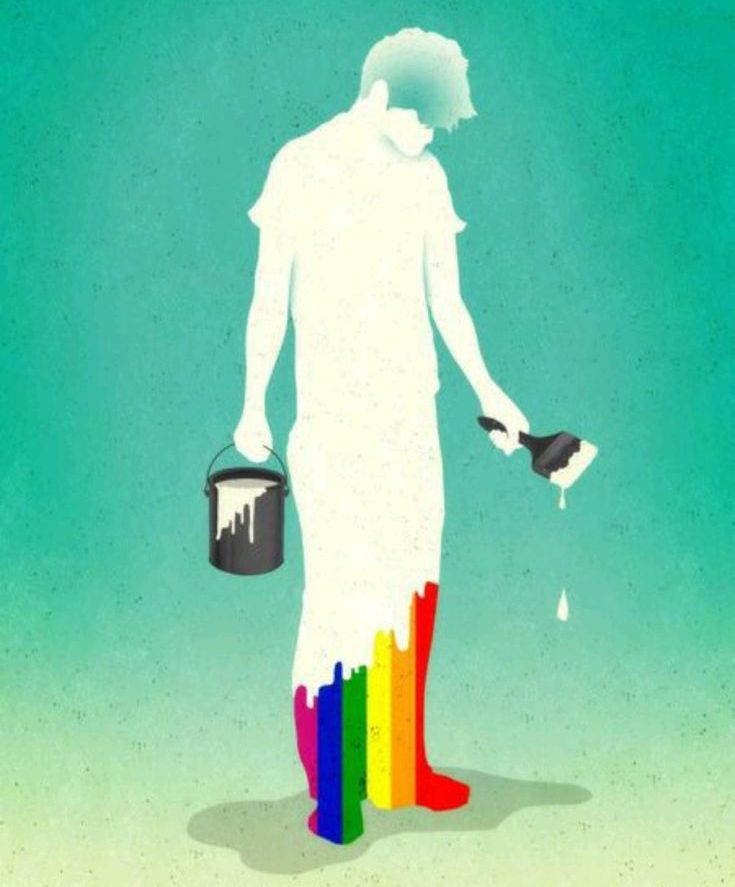
In clinical practice, gender transition is often understood through its most visible aspects—bodily, social, or legal changes. However, from a psychological perspective, it involves a much deeper process: a reorganization of identity, personal narrative, and the way an individual relates to both themselves and others.
Transition is not a single decision or moment. It is an unfolding process that includes movement, uncertainty, and gradual integration.
Beyond Change: The Search for Coherence
For many trans individuals, transition does not begin with a clear decision, but with a more diffuse and persistent experience of dissonance. There is often a sense that something does not fully align between internal experience and external perception.
In this context, transition is less about becoming someone new and more about reducing that misalignment. It is an attempt to bring external reality into closer correspondence with an internal sense of self that may have existed for a long time, even if it was not fully articulated.
This movement toward coherence can bring relief, but it also opens space for new questions about identity.
Identity in Motion
One of the less visible aspects of transition is that identity does not immediately stabilize. As external elements shift—such as name, pronouns, appearance, or social positioning—internal reference points also begin to reorganize.
This can create moments of uncertainty or unfamiliarity. A person may feel more aligned in some ways, while in others they may experience a lack of clarity about who they are becoming.
This does not indicate a problem. Rather, it reflects that identity is not fixed, but constructed over time. Transition includes not only affirmation, but also exploration and adjustment.
Grieving What Is Left Behind
While transition is often associated with relief and affirmation, it may also involve experiences of loss. These are not necessarily losses one wishes to avoid, but they are nonetheless significant.
There may be changes in relationships, shifts in family dynamics, or a distancing from previous roles and ways of being perceived. In some cases, there is also a need to process the relationship with a prior version of oneself.
This can give rise to a form of grief—not as regret, but as a necessary process of integrating past and present. Transition, in this sense, is not only forward movement, but also psychological elaboration of what is being left behind.
The Role of the Other
The responses of others play an important role in how transition is experienced. Acceptance, recognition, doubt, or rejection all contribute to the environment in which identity develops.
Supportive contexts tend to allow for a more stable process, while ongoing invalidation can increase insecurity or the need for external confirmation.
This does not mean that identity is determined by others, but it does highlight that it develops within a relational field. The process of becoming oneself is not entirely internal—it is shaped through interaction.
The Body as Lived Experience
For many individuals, the body becomes a central focus during transition. Physical changes—whether social, hormonal, or surgical—affect not only appearance, but also the way the body is experienced.
These changes can increase a sense of alignment, but they also require time to integrate. The body does not always feel immediately familiar or fully “owned.” Instead, there is often a gradual process of re-inhabiting it.
This involves developing a new relationship between internal perception and external form, allowing them to come into closer alignment over time.
Reorganizing Relationships
As identity shifts, relationships often change as well. Some become stronger, others more complex, and some may no longer be sustainable.
These changes are not always a reflection of the relationship itself, but of the capacity of those involved to adapt to transformation. At the same time, the individual in transition is also changing their position within relationships—how they present themselves, how they are perceived, and how they engage.
This often requires ongoing negotiation and adjustment.
Integration and Continuity
A central psychological task in transition is achieving a sense of integration. This does not require rejecting the past, but rather incorporating it into a broader and more coherent narrative.
Even when aspects of a previous identity no longer feel accurate, they remain part of the individual’s history. Integration involves recognizing these different moments not as contradictions, but as elements of a continuous process.
This allows for a more stable and cohesive sense of self over time.
From Transition to Living
As the process evolves, transition often becomes less central to daily experience. What initially requires significant attention gradually becomes integrated into the background of the self.
At this point, the individual is no longer primarily defined by the process of transition, but by a wider range of experiences—relationships, goals, interests, and personal meaning.
Transition does not disappear, but it no longer organizes the entirety of experience.
A Question to Accompany the Process
Within this process, one question may offer a useful point of reflection:
Am I trying to become someone, or am I learning to recognize myself as I am?
This question does not require an immediate answer, but it can open space for a more flexible and less pressured experience of identity.
Because ultimately, transition is not only about changing how one is seen, but about developing a more stable relationship with one’s own experience.